independent mp loses portfolio

independent mp loses portfolio

// news photo: has piho rua seen his last sunset as tourism minister?

Cook Islands tourism minister Piho Rua has been sacked just months after taking the post, according to rumours in the capital Avarua.
"It's not what he was sacked for, it was which ones," said one businessman.
"I can think of 200 reasons."
Rua is hugely unpopular in the private sector, being considered a loose cannon whose interference could damage tourism, the country's number one industry.
No official confirmation of the sacking or the real reasons behind it have emerged.
Most governments resist pressure from the private sector over the performance of cabinet ministers and senior officials.
Earlier in the day, for the third day running, a government official said they were ready to confirm cabinet portfolios - some seven months after general elections - "anytime now."
Only two of six ministers have had portfolios officially announced so far.
Portfolios for Prime Minister Jim Marurai and Health Minister Peri Vaevaepare both appear on the government website.
Government media relations unit GovMedia was not able to supply portfolio lists for others in cabinet: Deputy Prime Minister Sir Geoffrey Henry and ministers Tom Marsters, Tupou Faireka and Piho Rua.
All have been quoted in the media as representing various portfolios.
Now Rua looks like losing his.

cooks announce theme for 40th

//PRESS RELEASE

A simple but expressive theme has been chosen for this year’s 40th Te Maeva Nui Festival.

“Te Maeva Nui o te Basileia, Celebrating a Nation,” will be the overall theme of the 2005 Te Maeva Nui which will mark 40 years of self-government.

“Being the 40th year we felt we needed a meaningful theme that conveys the spirit of the 40th Te Maeva Nui,” says Ministry of Cultural Development CEO Willie John.

Under that main theme will the sub-theme to help guide and inspire competing dance groups with their compositions.

The sub-theme is “Akararangi I Toku Tupuranga -- Celebrating My Heritage.”

The sub-theme has been defined into six categories for teams to work with.

q Peu Tupuna – Traditional Customs

q Porotiki – Politics

q Evangelia – Religion

q Kopu Tangata – Genealogies/Family Structure

q Reo Maori – Maori Language

q Tarekareka Tipoti -- Sports

Secretary of the Ministry of Cultural Development Sonny Williams explains that the former name of Constitution Celebrations was changed back around 1994 at the request of then prime minister, Sir Geoffrey Henry. “Government wanted a Maori translation for the Celebrations, something that would capture the essence of our annual festival and convey in our language that it is an event to celebrate self-governance and our Cook Islands culture.”

Te Maire Maeva Nui was first used, says Williams, “but this was a bit of tongue twister and could be confused with Te Maire Nui, the 1992 Pacific Arts Festival held in Rarotonga.”

“So we changed it to Te Maeva Nui and Cabinet endorsed it in 2001,” recalls Williams.

Williams says he also changed the concept of the Te Maeva Nui, with annual themes being based on clearly defined cultural themes for all teams to work with.

He says over the years these themes have changed to show the progression and development of Cook Islands culture captured in the original items performed by the teams. This began with the 2002 theme Te Kapuanga o Toku Enua e Toku Matakeinanga – The Origins of My Island and Tribal Heritage.”

“Over the years we have tried to catalogue all the performances and the korero by the teams have been preserved by the Ministry to show our history and also the cultural changes and developments that have taken place in our country.”

“So our 2005 overall theme of Te Maeva Nui o te Basileia, Celebrating a Nation’ expresses what is happening this 40th year of self-government.”

Further information: Flo Syme-Buchanan Media, Marketing & Promotions Ministry of Cultural Development Ph: 20713 Mob: 55944

bank's new freedom of information policy

// NEWS LINK
Asian Development Bank officials today approved a new Public Communications Policy that gives the public greater access to the documents it produces and commits the bank to greater openness and dialogue with stakeholders.

deputy chair wants industry response

media jason and lisa 02.JPG

// news photo: members of the cook islands media have had greater success promoting industry development on the regional stage than at home. Media leaders in the Cook Islands have maintained "extraordinary" silence on reform proposals by government, and proposed freedom of information legislation says Florence Syme-Buchanan, industry representative on the government broadcasting council. "There are wide ranging and comprehensive media laws up for discussion," says Syme. "So far however there has not been one response from either of the two main groups." Both groups have been involved in a so-called "media war" for the last seven years. Syme says industry leaders on both sides are ignoring media reform laws in the hope they will go away. "As an industry, the media has lead calls for reform. "And yet when it comes time to make any changes, it seems our media organization can be as deaf and blind as some of our politicians." After taking on the role of deputy chair, Syme also took on a contract for the Cook Islands Broadcasting Corp. This contact included looking into re-establishing a public radio broadcasting service, proposals for industry reform and freedom of information laws and media training. Syme has also been given the responsibility of drafting national media policy. "I've contacted all local media stressing that we have this fantastic opportunity to decide what shape we want our media policy to take, and almost no one has given me feedback." "This is so very, very disappointing." She insists this role does not compromise her standing as an independent journalist and industry representative. "As an industry representative I have been left completely uninformed as to how interested parties feel towards these proposed laws and the content of national media policy. "In the absence of any feedback, I have attempted to negotiate in good faith with government on behalf of the industry." She compared the lack of industry response with 1995, ten years ago, when the media industry united to fight the former Media Standards bill. "What has happened to that unity? "It is becoming increasing apparent that all sides of the political spectrum now have a clear approach over the last seven years of favouring one media group over another." "This approach is not without precedent around the world. "Over and over again, however, political meddling in media has failed to improve standards or governance." Syme called on all news media companies to end conflict-of-interest positions within governments-of-the-day. "As a media consultant and independent journalist, I have not allowed my contractual obligations to government influence my advice to the board. Syme said government needs to call another industry meeting to nominate a replacement for her on the broadcasting board. "If the industry cannot trust each other then they should agree on someone else from outside the industry who understands the workings of the media." She hopes the industry does not respond to her calls with more silence. If the news media industry fails to act, Syme warns they may end up with laws they don't like. "It's no use running crying to government after laws have been passed."

speaker to resign, stand in by-election

// NEWS
Speaker of the Parliament of the Cook Islands, Norman George, may be leaving his top job just a few months after getting it.
"One of the MPs for Atiu is going to stand down and Norman is going to stand for his seat," said one government source.
"He wants to be prime minister," said the source.
Upoko Simpson is believed to be the MP said to be standing down.
A loyal George supporter from more than a decade ago, Simpson is past retirement age and considered a parliamentary lightweight.
George fought bitterly for his seat in Atiu, one of two, now held by his successor in the Democratic Party nominations, Eugene Tatuava.
He took over the speaker's job after losing his seat to Tatuava.
George also played a central role in coalition negotiations, putting another long time supporter, Jim Marurai, in as representative for the Demo offshoot, the Demo Tumu.
This grouping is not registered anywhere or have a formal party structure.
If Simpson resigns, a by-election will be called within weeks.
George is more than likely to take advantage of strong support in the seat.
No one has yet commented publicly on behind-the-scenes negotations.
If George does resign, it will the latest twist in a political career highlighted by two eras of coalition government.
Both eras have been marred by widespread and continuous allegations of corruption.
Supporters dismiss criticism against George as jealousy, saying their man is someone who gets things done.

photo report: titikaveka cicc

photo report: titikaveka cicc

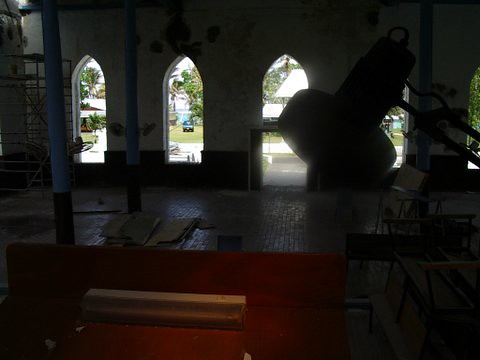
// NEWS photo: light reflects off a puddle inside the titikaveka cook islands christian church, undergoing renovations after the cyclone season. some are worried history is being tossed out the window.

waiting for a match

waiting for a match

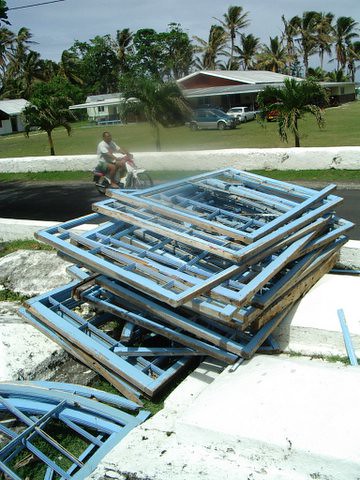
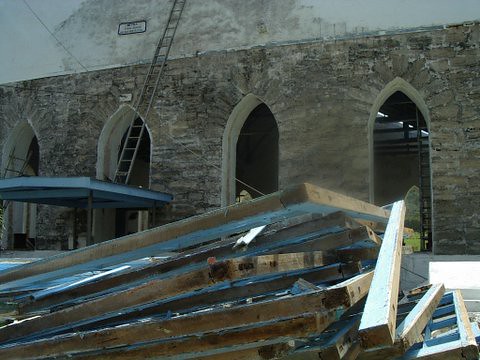
Historic wooden window frames lay stacked on graves outside Titikaveka CICC, waiting to be burnt, thrown away or, at best, given or sold to the few people who value them.

renovations versus preservation

renovations versus preservation

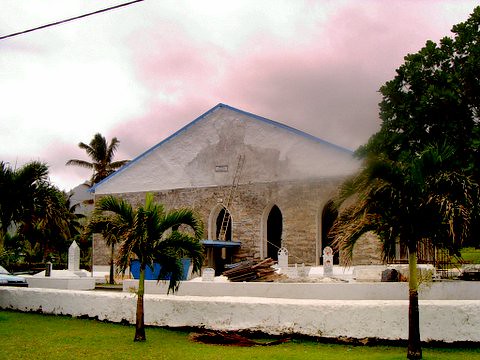
A fresh coat of paint to the top third of the church front is nearly finished. There are concerns however that enthusiasm for renovations has caused preservation to be literally tossed out the window.

lit from the pulpit

lit from the pulpit

A desk lamp gleams dimly off the pulpit at Titikaveka CICC as workers take a break from renovations.

mountain view

mountain view

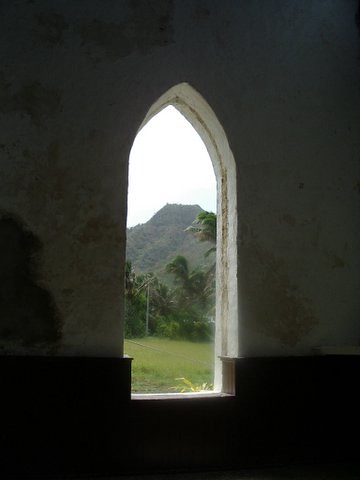
Through one of the rear windows of the Cook Islands Christian Church at Titikaveka.

church fans

church fans

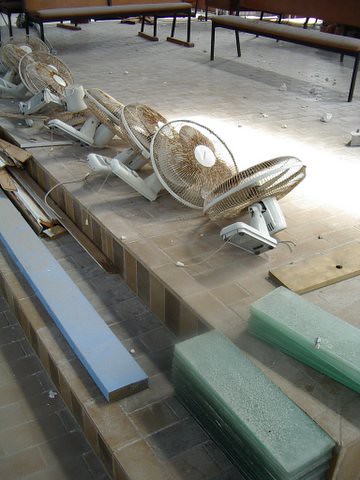
A line of fans and louvres are stacked on the floor.

missing window

missing window

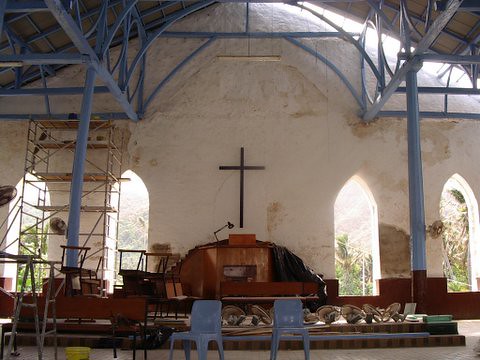
A window directly behind the pulpit was cemented up some time ago.

history on the rubbish dump

history on the rubbish dump

Another casualty of the cyclone season is one of the country's tupuna, the Titikaveka CICC.
Last week, workers removed wooden frames been removed from the historic coral and limestone building.
Most of the frames have been carefully stacked but others are partly broken and already tossed into a jumbo bin.
"There were some in there still with the glass in them," says one worker.
"So I took it home, cleaned it."
He agrees there are concerns about the frames.
"A lot of people have stopped and asked the workers but they say we are only following orders."
No telling how long the frames will be there.
"You better be quick," says one of the supervisors.
"There are no guarantees. A lot of people have been asking for those."
He says the frames have to come out for one simple reason: "they're rotten."
Historical value is recognised by the church authorities, he says.
"That's why we don't paint the front of the church, so that people can still see the workings," says the supervisor.
Are they the original frames?
"I don't know."
A fresh coat of paint is being applied as per the original scheme to the top of the churche's front wall.
"In renovations before," recalls the worker, "we wanted to lower the ceiling because it is too high for us to work on. But the elders told us, leave it the way our ancestors built it."
Are they the original frames?
"Yes."
Was it the original glass in the frames?
"Yes."
Titikaveka CICC is the latest church to under-go modern renovation.
Around the country, many churches are now framed with aluminium, the wooden originals burnt or tossed out.
On a few occasions, some residents have bought the frames to save them from destruction.
Renovators say the frames would be worth thousands if not tens of thousands on the antique market.
Restoring the frames would no doubt cost as much.
At the moment however, yet another invaluable piece of national history looks like being dumped on the rubbish heap.
Members of the Historic Places Trust have yet to make any public statements about the renovations.
If and when they do, it will probably be too late.

what lessons?

what lessons?

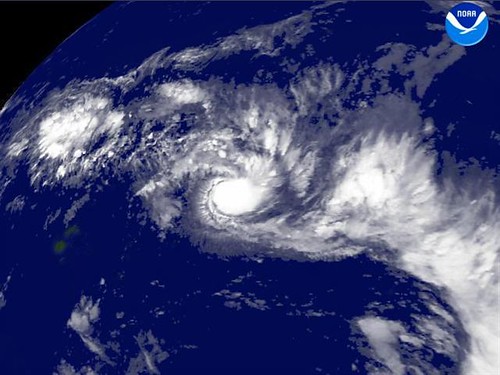
photo: cyclone meena gathers strength as it nears the cook islands. // OPINION What lessons can we learn from the latest cyclone season? Possibly the first is that we do not seem to be learning anything. We live in the world tropical zone. There are cyclones nearly every year. Most years the country is lucky. Some years we are not. Over any 100 year period, there may be three or four years when we can be very unlucky. The worst year of the last century was 1997 when 19 died, in Manihiki, during cyclone Martin. No one died this year. In fact, we got off quite lightly. Pukapuka was devastated, but no one drowned. Light damage means big dollars, however. According to government, eight percent of all rooms were knocked out by cyclones, five in as many weeks. Eight percent may not seem high. Most of that eight per cent is made up of premium waterfront rooms, from which the industry earns top dollars and bookings. Latest statistics show occupation rates of around 60 to 70%. Take your cyclone-gutted rooms from that total and the percentage rises to 11% or more than one in ten of the country's top producing rooms. Let's give a big discount and say each of those rooms were worth $100 a night. That comes to about $16,000 a night lost revenues, or $112,000 a week. Give about three months for those rooms to get back to full capacity and we are talking a minimum total loss of $1,456,000. And yet authorities continue to allow properties to erect rock walls that have been proven, over and over again, not to work. In fact, rock walls are against the law as they have a negative impact on the environment. No one wants to enforce those laws. What will happen when we get hit by the big one? Another, more worrying, example. At the height of Cyclone Meena, about 20 people were praying for their lives aboard a small trading ship. By some miracle, they made it through alive. It could easily have resulted in as many deaths as Cyclone Martin, three years into a new century instead of ninety seven. What was the ship doing there? Why was it allowed to sail straight into the cyclone zone? What warnings were given by authorities? If any, why were those warnings ignored? Why has there been no inquiry or prosecution? Risking the lives of 20 people would seem to be good cause to hold an inquiry. In fact, it might be a good idea to call a commission of inquiry. Then repeat that inquiry every year, tasking it to recommend prosecutions against those who continually fail to wake up to the fact that we live smack, bang in the middle of a tropical cyclone zone. Otherwise, more Cook Islanders will pay for official inaction. With their lives. And that's another lesson we seem to be stuck on learning, over and over again.

reforms: law society denies rumours of misconduct hearing

// reform news by editor jason brown ------------------------------------------------------------------------
law society denies rumours of misconduct hearing // avaiki nius graphic
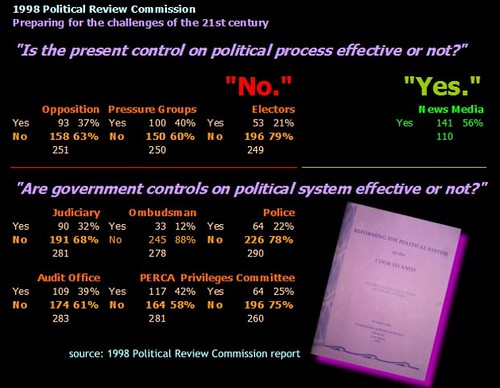
Rumours about the private affairs of a lawyer getting out of control have circulated Rarotonga for days if not weeks now. One of many scandals affecting different sectors on the island, the rumours have so far stayed out of the media. Including rumours about alleged misconduct hearings by Law Society members. Not true, says Law Society president Tim Arnold. He says no members have called for a hearing into allegations of misconduct against a lawyer. "I will be in touch on the other points raised," he says in response to written questions. avaiki nius agency has been told by several sources about a lawyer said to have been living with an underage girl. The girl is said to have laid a complaint with police over being assaulted by a man she was living with. However the complaint was withdrawn after the man's mother spoke with the girl's father. One source said the girl was living with the man with the father's blessings. ANA asked Arnold five questions, as below. 1. Did a member of the Law Society call for a hearing to discuss allegations of misconduct against a lawyer? 2. Was such a meeting scheduled? 3. What were the nature of the allegations? 4. Will the hearing be held? 5. Can you give me background on how complaints against a member of the Society are handled? 6. To your knowledge, how many complaints have been laid with the Society over the years? How many hearings? Any upheld? 7. In your opinion, what checks and balances need to be put in place within the Law Society, and the justice system as a whole, to help ensure proper performance by lawyers? "The short answer to the first question raised," replied Arnold, "is that on receiving your email I enquired of others in the Society and it appears no member of the Law Society has called for a hearing to discuss allegations of misconduct against a lawyer." Arnold's reply to misconduct allegations on 8th April 2005 came just one day after questions were sent on 7th April 2005. BACKGROUND This quick response compares with earlier queries sent to the Law Society that have gone unanswered for more than two years. Those earlier questions dealt with a partial media ban by the Registrar of Justice, Nooapii Tearea, blocking access to some records by at least one journalist. Ministry of Justice staff told ANA "the registrar" ordered them not to allow media inspection of civil claims and decisions. Tearea's media ban came against a background of continuing controversy over attempts to reform the political system. Interim executive members of the now defunct Cook Islands Media Association wrote to the Law Society, asking for their assistance in clarifying what public records should be open to the public. Law Society Secretary Brian Mason promised to respond on numerous occasions over two years but never did. Members of the Law Society are rarely examined on public performance. Or private behaviour. One lawyer was known for extremely heavy drinking. Sources said he crashed his car repeatedly, including, on one occasion, into a bus stop, just an hour or two before children were due to start going to school. By comparison, Arnold is one of the island's few independent lawyers. Arnold is not allied with a big law firm like Browne Gibson Harvey. Like them and every other lawyer on a small island he often has to contend with competing fields of interest. Arnold previously worked at Browne Gibson Harvey, known for years as "Clarke's" but resigned to form his own company. Browne Gibson Harvey was then owned by Trevor Clarke, architect of much of the country's offshore banking infrastructure. Offshore banking remains a staple of most of the country's lawyers. Mason is another Clarkes resignee, leaving to work for government, including in public relations, but now works for one of the dozen or so offshore companies. Some of these companies are suspected of being heavily involved behind-the-scenes with political parties. At the birth of the industry in 1981, laws were laid down to guard the secrecy of the offshore banking, then mostly concerned with tax haven activities, as exposed in the Winebox scandal. Anyone breaking secrecy laws could be fined tens of thousands of dollars and jailed. Discussing the affairs of foreign companies was and is still forbidden by law in the Cook Islands. In 1994, offshore bankers praised then prime minister Sir Geoffrey Henry for "extraordinary cooperation" in passing new laws to assist the industry. He is not alone. Offshore banking is one of the few areas that all members of parliament cooperate on, with all political parties repeatedly on record, in parliament, the media and their manifestos as expressing their support for the industry. Transparency ends however when it comes to passing new offshore laws. Without fail, for every new law, parliament has gone behind closed doors, or what is known as in camera, for briefings by officials from Crown Law, and, lawyers from offshore banking. In 1999, one of the first acts of the new Terepai Maoate government was to repeal an amendment by Sir Geoffrey Henry to the Electoral Act requiring political parties to declare income sources. Maoate's Democratic Party was also dogged by rumours of a $70,000 contribution from offshore banking sources to party funds. It is not clear how much of an effect - positive or negative - all this legally enforced secrecy is having on the professional standards of the legal profession. What is clear is public feeling towards lawyers. Just the year before, in 1998, surveys by the Political Review Commission found a low level of public confidence in the judiciary. Only 32% of the 281 people surveyed had confidence in the justice system as an effective control on the political system. In fact, embarassingly for everyone, only one of 10 sectors surveyed by the commission reached majority support: the news media, with 56% support. Since then, some sectors have taken a higher profile and probably increased confidence, especially audit, and perhaps police after winning the Eddie Drollet case. Some have kept a low profile, including the briefly vocal Ombudsman Andrew Turua, risking still lower levels of confidence. And lawyers as well. Over the years, journalists have received dozens if not hundreds of informal complaints about legal services in this country. Not uncommon around the world, the complaints centre on high rates and inefficient service, including alleged industry-wide conflicts of interest. Nearly all of the complaints come from landowners. "They're like the doctors. They look after each other," said one landowner. More serious allegations centre on lawyers looking after themselves. A commission of inquiry promised to name names and pursue law breakers but is dismissed by most as amounting to little. For the moment, however, attention is focused on rumours and allegations surrounding one lawyer for alleged law-breaking in private, not professional, affairs. As calls for reform spread from political parties to other sectors of society, including the media, how the Law Society reacts to problems within its own ranks will also be watched with interest. // graphic: yes to news media: results from surveys in the 1998 Political Review Commission.

chamber president rejects criticism

chamber president rejects criticism

Some homes may still be getting rid of the last of cyclone rubbish, as with this shot taken last week.
At the chamber of commerce, however, things are just starting to hot up.
Early criticism has been made about procedure at Monday's meeting of the Chamber of Commerce to chose nominations for the Tourism Corporation board, for approval by the minister of tourism.
One critic said that the procedure followed was flawed.
This is denied.
"It was the meeting that decided," said chamber president Theresa Manarangi-Trott about procedures set by members.
Criticism centres on the fact that sectors previously represented on the board of the tourism corporation have now been replaced by one sector, on one island: Rarotonga accomodators.
One chamber member said some nominations were left off a blackboard of names. Others
Questions from avaiki nius agency: Some nominations were not written on the board, while others were?
Answers from Trott: "No. What names? What names were left off the board?"
So to your knowledge, all names were on the board?
"Yes. There were a number of times it was asked during the meeting whether there were any further nominations and no one put any further names forward so it was moved to close nominations."
Some claim some nominations were read out, others not?
"No. What ones were not read out?"
So to your knowledge all nominations received were read out?
"Yes."
Has there been any complaints about the election process?
"Yes. I have just received something from Mrs. [Helen] Wong, copied to Mr Wong."
What are your reactions to those complaints?
"I have only just received it and haven't actually made a response."
In the interests of transparency, can we have the vote counts for all of the candidates?
"That's something that needs to go back to the meeting. Nothing to say you can't. But the meeting didn't say you can. In the end they end up at the tourist authority."
So we can't have access to the actual numbers?
"They've actually been destroyed."
Why was a decision made to limit the numbers of candidates to 5?
"It was a decision made at the meeting. And the meeting agreed that is what should happen."
Do you think as a general matter of transparency that the names and votes should be given out?
"No, because it is the meeting that decides. If the meeting decides, its a procedural matter, then that issue does not arrise."
The act only requires a "minimum" of five nominations? Wouldn't more transparency on voting figures give the minister a better idea of how much support each has?
"That is something you will have to raise with the minister. In any case, it was the meeting that decided on that procedure."
Manarangi-Trott has given the chamber a much higher public profile than any other presidency since being elected late last year.
There have been more public meetings on business issues in the last four months than possibly the previous four years.
Every high profile, however, attracts criticism sooner or later.
Like most fires, the criticism dies out.

migration picks up again

//NEWS
 
Cook Islanders left the country at a higher rate last year than the two previous years.
Migration loss came to nearly 1,000 more people in 2004.
Exact figures show 943 more people left than came back between January and December last year.
2004    -943
2003    -703
2002    -727
2001    -950
2000    -1,429 people
This adds up to 4,752 people lost to migration in the last five years.
 

economic outlook remains positive says mfem

// PRESS RELEASE
 
Cook Islands Government Press Release
 
Ministry of Finance and Economic Management
 
Friday, 1 April 2005


Economic outlook remains positive despite cyclones
 
The Economic Update comments that effects of the cyclones on economic activity are expected to be relatively short-lived, with activity expected to return to normal by around mid 2005.
 
Clearly, the five cyclones in February-March 2005 have affected the economy.  The Asian Development Bank (ADB) has estimated the cost of a comprehensive recovery program covering government assets, community assets and private residences at around NZ$10.5 million.  This does not include reinstatement of the beaches and foreshore strengthening or commercial facilities.
 
Data available suggests that the economy contracted during the March quarter 2005.  A number of trading days were lost as a result of the cyclones, and some, mostly smaller businesses, closed temporarily because of damage suffered.  Some flights were cancelled or diverted because aircraft were unable to land.  Some employees have been laid off temporarily, further reducing consumer spending.
 
Nevertheless, discussions with the banks and the private sector indicate that they remain generally optimistic about the economic outlook.  Most businesses have been able to resume operations quickly, with less than 8% of rooms in accommodation providers in Rarotonga out of commission.  Visitor arrivals are expected to increase significantly with five additional flights per week scheduled from March-April 2005.  Construction activity is also likely to increase because of rebuilding.
 
Growth is expected to resume in the June quarter and to accelerate throughout 2005.  In year average terms, economic growth is projected at 2.5% in 2004-05 and 2.4% in 2005-06, before returning to the long term growth rate of around 3.0% in 2006-07.
 
In terms of Government’s fiscal position, the advent of the recent cyclones means that taxation revenue and some other operating revenues will be lower than would otherwise have been the case.
 
The cyclones will also give rise to additional spending requirements.  Under the comprehensive recovery program, budget financing is estimated at around $1.0 million, primarily for cleaning up ($505,000), recovery of harbours, airports and water ($145,000), reinstatement of public infrastructure ($266,750) and contributions to reinstatement of community facilities ($100,000).
 
Fortunately, Government finances are in a sound position.  While the cyclones will clearly impose significant challenges, the strength of Government finances means that the Government is in a much better position to focus on reconstruction and to address other development challenges than would otherwise have been the case.
 
Nevertheless, the projections highlight that the 2005-06 Budget will be tight.  The requirement to run an operating surplus implies limited scope for new spending initiatives unless savings can be found in other areas.
 
// ENDS
 

tourism master plan update

tourism master plan update // NEWS photo: should the draft update to the tourism master plan be tossed out? tourism corporation's chris wong says he wants to know. Only four people bothered to respond in writing to the controversial updating of the country's 14-year-old tourism master plan. This worries tourism corporation chief executive Chris Wong. "To date there's only four return responses," he told Monday afternoon's meeting of the chamber of commerce. "It's a worry to me because I don't know if it means it (the plan) is alright or whether everyone wants to toss it out." There is something like 120 recommendations that have come out of this document. So far, said Wong, only four have taken the time to make submissions.

finance questions "substantive"

"The ministry of Finance has provided some substantive comments, questioning a lot of the recommendations, particularly with respect to deadlines, implementation and budgetary implications and the like." But these and other concerns cannot be addressed until tourism leaders respond. "We are not in a position to go forward unless we hear from the industry." Or "unless this particular document is in agreement with what industry views are." Wong said it is understandable there have been delays. "Cyclones distracted us from any particular focus."

only "draft recommendations"

Wong reminded chamber members the plan was still only a draft, one needing further input as a part of the update process. Next step for the draft is "to see whether or not there is full investment in these recommendations. The board have given agreement with these recommendations in principle. They have allowed this draft to go out into the public at large and get their input. Whatever feedback we get we have to take it back to Dr Peter Phillips. Any questions, and concerns and any suggestions and recommendations that you have will be handled by him."

not happening "overnight"

The next step, continued Wong, would be for the final update draft to go to government for budgeting. "It's not something that is going to happen overnight. There have been some very detailed points that have come out."

cooks tourism future.jpg

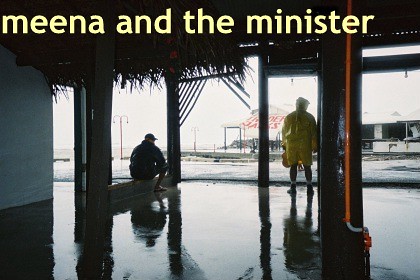
// FOLLOW UP meena and the minister. photo: avarua residents including tourism minister piho rua sheltered in the shell of paulina's restaurant after dawn broke on a fading cyclone meena. weeks later, doubts are growing about the potential impact of rua's leadership on the industry. --------------------------

by editor jason brown Tourism minister Piho Rua was seen this afternoon, arms akimbo, in the old marine resources building. Looking out to sea, talking with an official. His reappearance on the Avarua waterfront is a reminder the country's number one industry may have a problem. "He kept changing the subject all the time," reports one business man after a meeting with Rua. He's not the only one. Rua's role in the industry has been discussed around town as Rarotonga shakes off cyclone tensions and eases back into normal routine, including meetings of the chamber of commerce. Rua's role was discussed briefly at Monday's special meeting of the national Chamber of Commerce. Very briefly.

"who is the minister?"

"Who is the minister?" asks importer Brian Baudinet at the open meeting. About 65 people swapped smiles. This after all is an industry that survives hurricane ministers like Dr. Joe Williams. And real hurricanes, five of them. In a row. Rua may or may not be a similar. He is the first new MP for Rakahanga in 30 years, replacing long-time political lion of the north, Dr Pupuke Robati. Rua is a former policeman and prison superintendent with more than two decades of experience questioning criminal suspects. Rua rose to the rank of chief inspector, where he was not shy of wielding authority. His public profile dimmed when he went into business with former bond manager and convicted thief, Michael Benns. Then dived after he became the island's biggest pirate. Given past experience with ministers like Williams, business people are not too worried about Rua's background. No, the problem is, they are just plain confused by Rua's approach to the industry.

"he talks about this, that"

"He talks about doing this, doing that," said the business man, who commented on condition of not being quoted. One thing that Rua has talked about publicly to the media is knocking down the wharf front restaurant, Paulina's, and the old Marine Resources building. In it's place, the tourism minister wants to build an open park capable of holding concerts with a large, portable, stage at water's edge. "Light it up at night," he tells avaiki nius agency, building an image of hundreds of people along the waterfront, watching performing arts. Visionary stuff, say supporters. Especially while the reality in front of him at the time was the aftermath of cyclone Meena. Rubble strewn across the road, the new justice ministry fence smashed over. "Good!" he says. "I hate that fence." Most people would agree with him, and think similarly about the distinctly Chinese flavour of the new justice building.

"good! i hate that fence"

Questions remain. What, for example, about the local businesses at the wharf? "Eah!" says Rua dismissively, flicking his hand. As many as 10 people worked in one of the buildings, featuring a small scale, local style restaurant, and an attached tattoo venue, specialising in traditional designs. A toilet block was smashed in by Meena. All facing uncertain future. After Meena, Cook Islands Investment Corporation chief executive Tarita Hutchinson told avaiki nius agency the fate of the buildings rests with the board of the CIIC. At that stage, the board had yet to meet. Since then, there have been conflicting stories about what will happen to the Avarua waterfront. And that's without going into the rumours flying around Trader Jack's, only half of them put out by the owner of what was the country's best-known restaurant himself. Instead of allaying nerves in the country's engine room, however, minister Rua was off shocking the arts industry.

'sacking williams'

Performing and visual arts were estimated in 2001 as being worth $5 million to the country, according to a report by Arama and Associates. Sacking the head of the Ministry of Cultural Development, Sonny Williams, was another confirmation, said critics, that Rua is a loose cannon. Supporters say Rua is just the man to shake up an industry that has engineered its own problems, mostly environmental. Some feel, however, this is the last kind of thing the country or its number one industry needs when trying to recover from five cyclones.

pukapuka dry and lacking water

photos // NEWS
photo: lack of water is the most urgent crisis facing the country's worst hit island. pukapuka was close to running out completely at the weekend, according to reports.

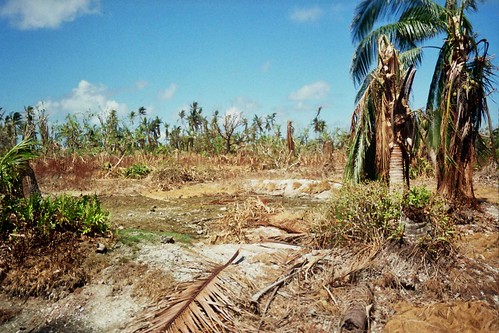
salt burnt grass on pukapuka

photos // NEWS
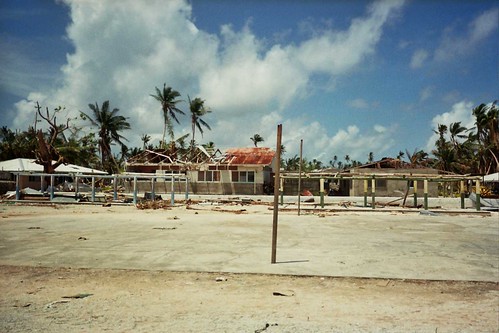
photo: grass browned dry from sea surge is a lasting sign of hurricane force weather on pukapuka.air rarotonga used up the last of its fuel on pukapuka flying the $14,000 charter to the cyclone ravaged atoll of 600 people. five cyclones in five weeks exposed more big gaps in the country's disaster preparedness. not in the air, but the sea, where 20 people in a church group were sailed straight into the middle of a super-cyclone. now lives are being risked again with an urgent shortage of water in pukapuka, where temperatures are hitting 40 degrees.
// pukapuka photos barbara dreaver

shade thrashed from trees

photos // NEWS
photo: shade is at a minium in pukapuka after cyclone percy thrashed most trees more than half bare of leaves and some branches. sea water has swamped the atoll's taro patches.

water for pukapuka misses the boat

photos // NEWS
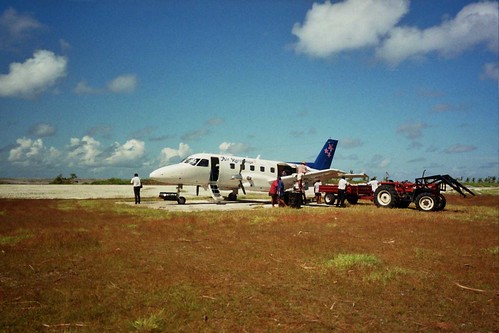
photo: a 1.5 litre bottle of vital, rarotonga produced water on the seat above, flew the 800+ kilometres to pukapuka island with the special air rarotonga charter. the relief team who brought the bottle learnt that a relief ship had brought clothes but no water for pukapuka. government workers picked out the prettiest dresses they could find and wore them with hard hats and boots during road reconstruction. in pukapuka, people who get things wrong are teased mercilessly. it is not yet sure who ordered clothes instead of water to be sent to pukapuka after a super-cyclone. the water was left behind in manihiki, according to one government source.

tvnz's pacific unit covers water crisis

photos // NEWS
photo: tvnz's pacific unit reporter barbara dreaver, right, covered disaster relief efforts. her story on one news raised the alarm about lack of water in pukapuka. local media coverage of cyclone damage in the outer islands has been limited by a lack of resources.

tanks for the water

photos // NEWS
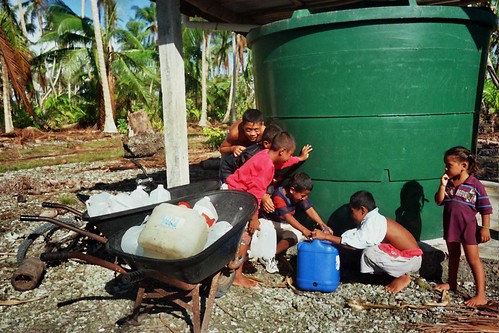
photo: children fetch water from a community tank, filling plastic water bottles and carting them home in wheelbarrows.

concerns over repairs to church

concerns over repairs to church

// NEWS
workers repaired sections of the roof and walls at titikaveka cicc church this week on rarotonga, hoisting in concrete by crane. a day or so later, heritage observers were disturbed to see the church's wooden window frames ripped out. other churches around the country have most commonly replaced historic frames with modern aluminium ones. this leaves an ever dwindling number of churches in their original state. so far, critics say a historic places board has been completely ineffective in protecting the many heritage sites around the country.

passing on the latest

passing on the latest

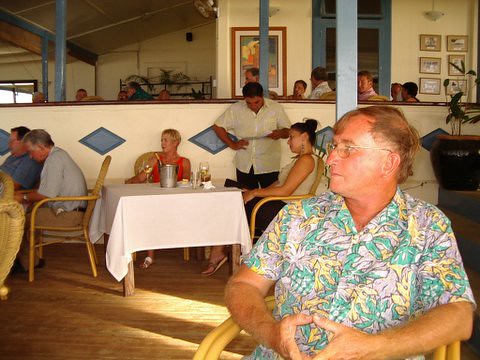
// NEWS photo: former cook islands trading corporation general manager robin bullen pictured at right with his successor, gaye whitta, pictured sitting above. they were among 63 other members of the chamber of commerce at tamarind's restaurant for a special meeting. chamber members gave their votes to five names for two seats on the board of the national tourism corporation. minister piho rua makes the final decision.

"bumpy times" says outgoing member

"bumpy times" says outgoing member

// NEWS
photo: outgoing tourism board member thomas koteka said the industry had been through some "bumpy times." as well as cyclones, koteka says state spending on tourism has remained static for the last three years. tourism spending can also be seen as shrinking against its share of the budget, he says.

mood upbeat at tourism meet

mood upbeat at tourism meet

// NEWS
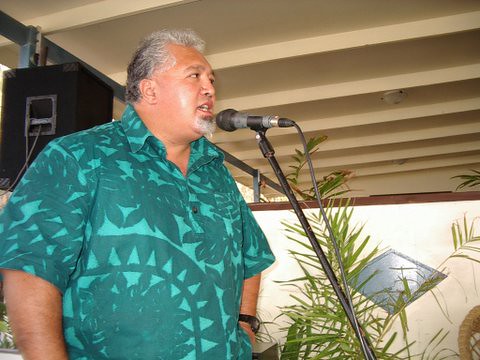
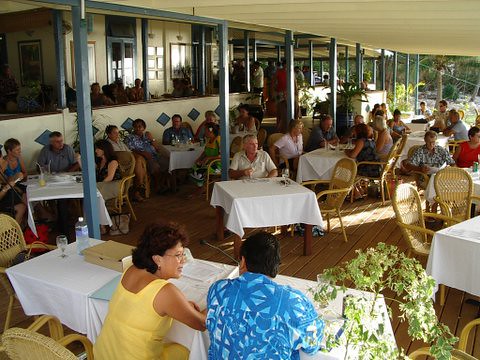
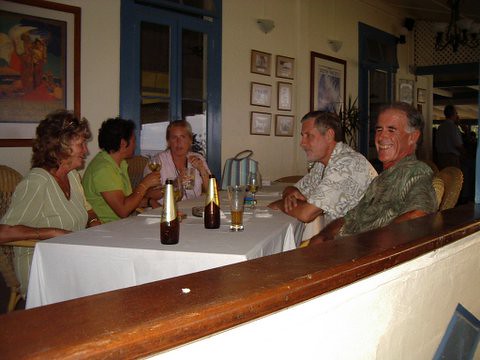
photo: nearly all levels at the tamarind restaurant were packed for this afternoon's chamber of commerce meeting on nominations to the tourism corporation board. most members seemed in good spirits, calling out jokes and enjoying the new venue.

afternoon begins to fade

afternoon begins to fade

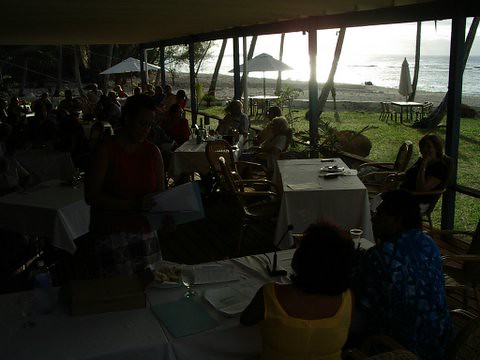
photo: the seas looked adazzle late this afternoon as the sun set towards avarua.

tourism meeting ignores outer islands

tourism meeting ignores outer islands

photo: rarotonga accommodator and juice expert, hugh baker, nominated the only candidate from the outer islands. a mangaia accommodator, ara moana co-owner jan kristensson, did not make the final five. this leaves atiu ariki ada rongomatane as the sole outer islands representative on the national tourism board. outer islands growth has long been identified as a priority for tourism by various governments. outer islands critics say little has been done to build capacity however.

NEWS

jane wichman one of two women

jane wichman one of two women

// NEWS raro tours general manager jane wichman was one of three women in nine nominations, as was teina hosking, represented here by daughter adrienne tinirau right and fellow nominator tamatoa tinirau from origin gas. wichman was sucessfully nominated by art studios and ariana bungalows. the other sucessful woman nominee was june baudinet. there is currently one women among seven men on the board. ada rongomatane ariki, from atiu, is also the only outer islands representative.

tourism vote: "who is the minister?"

'tourism // NEWS
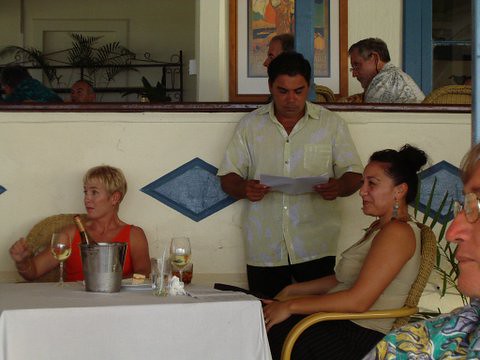
photo: brian baudinet, second from right, had the simplest question of the afternoon. "Who is the minister?" he asked. "Honourable Piho Rua," said tourism chief executive chris wong, keeping a straight face. business people who have met with the minister report he is highly exciteable and changes topic frequently. one observer not at this table said the first could be nerves. the second? maybe a habit left over from his days as a chief inspector for police.

at the chamber

at the chamber

photo: calling for a status report from outgoing board member thomas koteka.

written nominations

written nominations

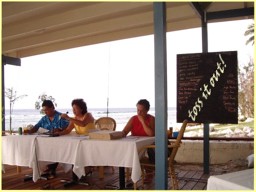
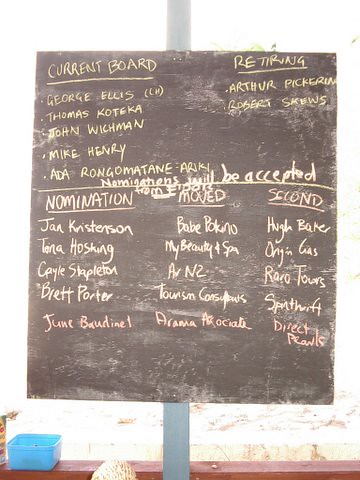
photo: specials of the day? early tourism industry nominations went up on the tamarind blackboard this afternoon.

five new nominations for national tourism board

five new nominations for national tourism board

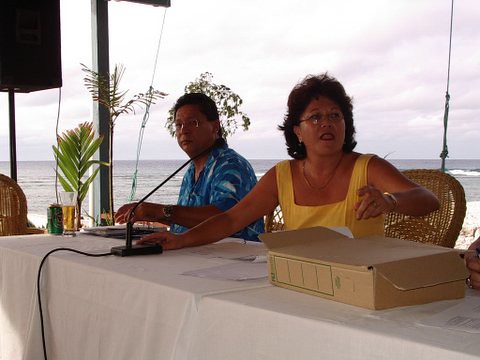
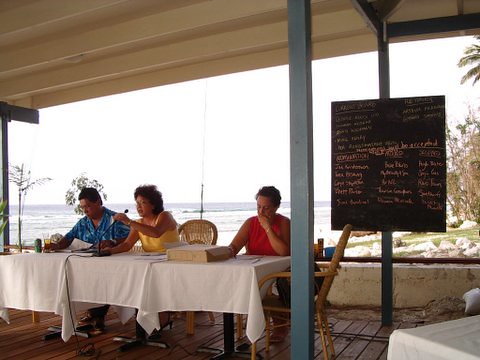
photo: getting ready to take the vote on five new nominations from the chamber of commerce for the tourism corporation board. chris wong, tourism chief executive, and theresa manarangi trott, chairwoman and president of cook islands chamber of commerce, with donye numa, cicoc executive secretary taking minutes. NEWS Five new nominations ranged across both ends of the tourism industry tonight at a special meeting of the Cook Islands Chamber of Commerce. Robert Skews, Henry Hoff, Jane Wichman, June Baudinet and Brian Baudinet were nominated by about 65 people, most of them members. In doing so, the chamber continued to express urgency on "environmental" problems. Light applause and cheers greeted all the nominations, in what was the first big tourism meeting since five cyclones pounded different parts of the country. Left off the chamber's approved nominations list were any outer islanders. Called for 4.30pm, the meeting was packed Tamarind Restaurant at Pue to near capacity by 5.00pm and finished by about 6pm. Final decision on the two board positions rests with the minister. "Who is the minister?" asked one member, Brian Baudinet. There were smiles all around the restaurant. "Honourable Piho Rua," said Tourism Chief Executive Chris Wong.